Your First River Cruise in Europe: Everything You Need to Know Before You Go
Planning a river cruise vacation in Europe for the first time? A travel agent's honest guide to routes, cruise lines, cabins, timing, and the mistakes to avoid.
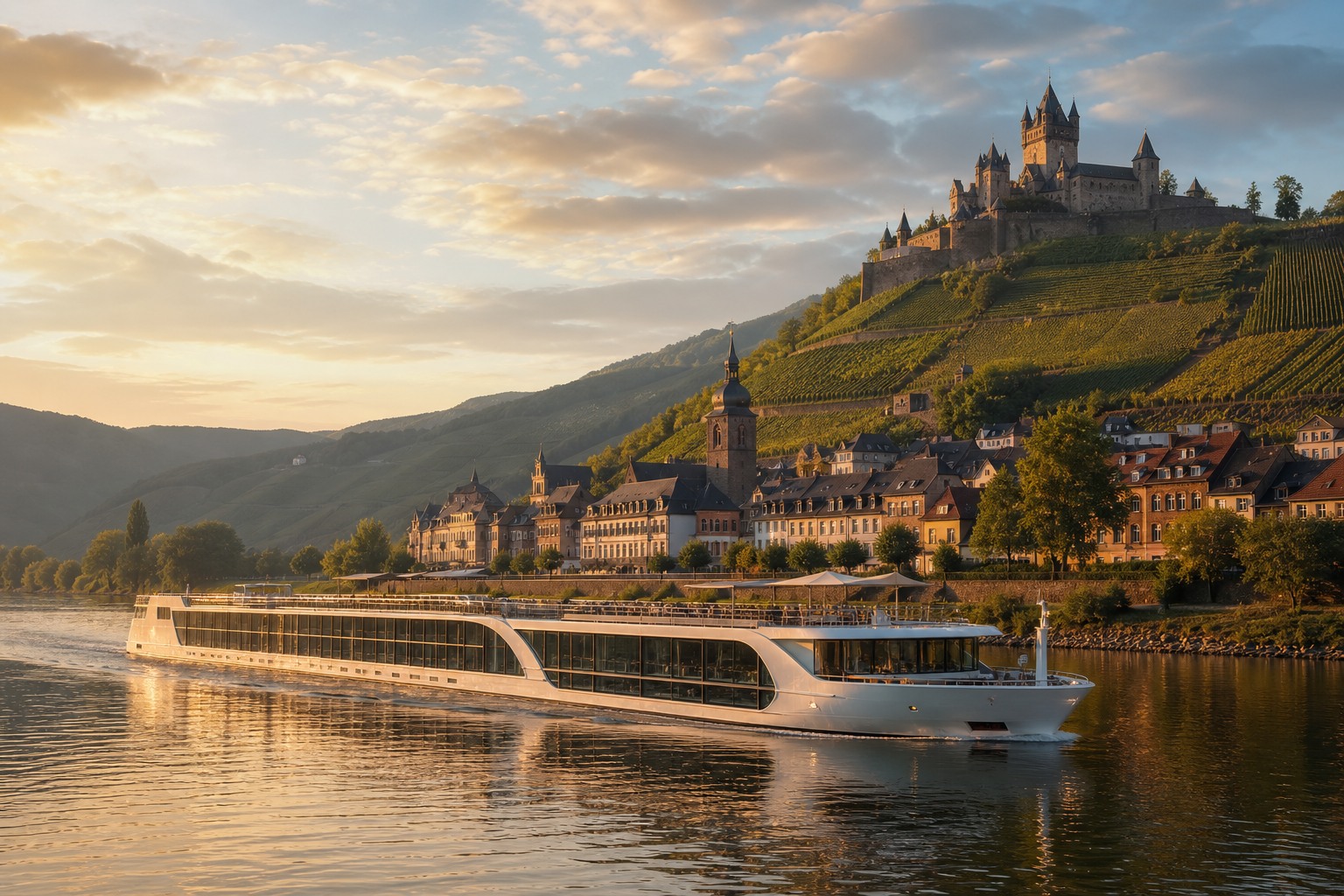
A river cruise in Europe puts you on a small ship — most carry between roughly 130 and 190 guests — that sails scenic rivers like the Rhine and Danube and docks right in the heart of one walkable town after another. For first-timers, the appeal is simple: you unpack once, wake up in a new city almost every morning, walk straight off the ship into the old quarter, and skip the rental cars, train schedules, and hotel-hopping that make independent European travel stressful. The three lines most first-timers should know are Viking (adults-only, no guests under 18, culture-forward), AmaWaterways (a bit more active and food-and-wine focused, family departures available), and Scenic (the most all-inclusive of the three, with butler service on its “Space-Ships”). Choose your itinerary first, your cruise line second, and your cabin third — in that order.
I’m Kelly, and river cruising is one of my favorite trips to plan for clients, because it turns “I’ve always wanted to see Europe but it feels overwhelming” into one of the easiest vacations a person can take. My clients often come to me nervous about logistics — connecting trains, dragging luggage between cities, figuring out where to eat in six countries — and river cruising quietly erases almost all of it. So let me walk you through everything I’d tell a first-timer sitting across from me, from picking the Rhine over the Danube to the cabin mistake I see people make again and again.
Key takeaways
- A river cruise is a small-ship trip on Europe’s rivers, docking in city centers so you can walk right into town — no rental cars, no train stress.
- Rhine vs. Danube is the classic first-timer decision. The Rhine leans castles, vineyards, and fairy-tale gorges; the Danube leans grand imperial cities like Vienna and Budapest.
- Viking, AmaWaterways, and Scenic are the three lines I recommend most, and they differ mainly in vibe and how much is included — Viking is adults-only, AmaWaterways is more active and family-friendly, Scenic is the most all-inclusive.
- Cabin choice matters more than on an ocean ship. A French-balcony or full-balcony stateroom on the upper deck is worth it for the constantly-changing scenery.
- Book early. Popular sailings — especially spring, fall, and the Christmas-market season — routinely sell out six to twelve months ahead, and the best cabins go first.
What a European river cruise actually is (and why first-timers love it)
Picture a long, low ship — narrow enough to slip through centuries-old river locks and pull up right alongside a town’s waterfront. That’s a river cruise ship. Most carry somewhere between 130 and 190 guests, which is a fraction of even a small ocean ship, and that scale changes everything about the trip.
Because the ship docks in or beside the town center, there’s almost no “getting there” friction. Your morning often starts with a short walk straight into a market square, a cathedral, or up a hill to a castle. You unpack once at the start of the week and your hotel floats you to the next destination overnight while you sleep. For a first trip through Central Europe, that ease is genuinely hard to beat — it’s why I steer so many European first-timers toward a river cruise instead of a do-it-yourself itinerary.
The scenery is also constant. On the Rhine and Danube, castles, vineyards, and medieval towns slide past your window all day. There are essentially no sea days the way there are on an ocean cruise — you’re in a port, or gliding past gorgeous countryside, nearly the entire time. If you want to understand how this compares to a big-ship ocean experience, I wrote a full breakdown of the Viking river vs. ocean cruise decision that’s worth a read.
Rhine vs. Danube (and the other routes worth knowing)
This is the first real fork in the road, so let me make it simple.
The Rhine is the storybook route. It threads through Germany, France, Switzerland, and the Netherlands, with the dramatic Middle Rhine gorge, hillside castles seemingly around every bend, terraced vineyards, and half-timbered towns. If your mental image of “Europe by river” involves fairy-tale castles and wine country, that’s the Rhine. In spring, the tulips of the Netherlands make it especially popular; in winter, it’s a Christmas-market classic.
The Danube is the grand-cities route. It links some of Europe’s most magnificent capitals — Vienna, Budapest, Bratislava — along with the Wachau Valley’s abbeys and vineyards in Austria. If you want imperial palaces, coffeehouse culture, and a Budapest-at-night sail-in that people talk about for years, the Danube delivers.
Beyond those two, a few other routes are worth knowing as you plan:
| Route | Best for | Signature stops |
|---|---|---|
| Rhine | First-timers, castles & wine country | Rhine Gorge, Cologne, Strasbourg, Amsterdam |
| Danube | Grand imperial cities | Vienna, Budapest, Wachau Valley, Bratislava |
| Douro (Portugal) | Quieter, wine-focused, warm weather | Porto, terraced port-wine estates |
| Seine (France) | Paris + Normandy history | Paris, Rouen, D-Day beaches |
| Rhône (France) | Provence, food & wine | Lyon, Avignon, Arles |
Here’s the honest advice I give every first-timer: don’t pick a river in the abstract — pick the specific itinerary that excites you most. Pull up one Rhine route and one Danube route, read the day-by-day, and notice which one you can’t stop thinking about. That gut reaction is real data, and it usually makes the whole decision easy.
The main river cruise lines in Europe: Viking, AmaWaterways, and Scenic
There are more than a dozen river cruise lines in Europe, but these three are the ones I recommend to first-timers most often. They’re all excellent — the differences come down to vibe and how much is baked into the fare.
Viking is the biggest name in European river cruising, and for good reason. Its ships have a calm, elegant, Scandinavian-modern feel, and the whole experience is deliberately adults-focused — Viking does not accept guests under 18 on its river ships. The style is culture-forward: destination lectures, regional cuisine, and included excursions rather than waterslides and casinos. If you want a refined, grown-up trip focused on history and scenery, Viking is a natural fit.
AmaWaterways has a slightly more active, food-and-wine-forward personality. It’s known for including a fleet of bicycles for guests to explore on their own, offering both gentle and more vigorous walking tours in most ports, and a strong culinary program. Unlike Viking, AmaWaterways does sail some family-designated departures and can accommodate younger travelers on select sailings, which makes it my go-to when a multigenerational family wants to river cruise together.
Scenic sits at the more all-inclusive, luxury end of the three. Its “Space-Ships” feature butler service, and Scenic leans hardest into a truly inclusive fare — bundling more of the tours, beverages, gratuities, and extras that other lines may price separately. If your ideal trip is one where you hand over your card once and rarely think about it again, Scenic is built for you.
Here’s how I frame the three for clients:
| Line | Vibe | Kids under 18 | Inclusive style |
|---|---|---|---|
| Viking | Refined, adults-only, culture-first | Not permitted (river) | Generous, culture-forward |
| AmaWaterways | Active, food & wine, bikes | Family departures available | Generous, activity-rich |
| Scenic | Luxury, butler service | Adults-focused | Most all-inclusive of the three |
If you’re weighing how “all-inclusive” really pays off at the luxury end, my honest take on whether an ultra-luxury all-inclusive line like Regent Seven Seas is worth it is a useful reference point — the same logic about what’s bundled versus billed applies to river cruising too.
What’s included vs. what’s not
One of the reasons river cruising feels so easy is that a lot is bundled into the fare — but the specifics vary by line, sailing, and promotion, so I never quote inclusions from memory. Broadly, here’s what to expect.
Usually included: your stateroom, all onboard meals, at least one guided shore excursion in most ports, Wi-Fi, and some beverages (often wine, beer, and soft drinks at lunch and dinner). Onboard enrichment — lectures, local performers, regional tastings — is typically part of the experience.
Often not included (or varies): international airfare, pre- and post-cruise hotel nights, premium or specialty excursions, spa treatments, gratuities (some lines bundle these, some don’t), and premium beverages outside meal times. Travel insurance is always separate, and I strongly recommend it on any big overseas trip.
This is exactly where a good travel agent earns their keep. The single most important thing I do before a client books is pull the current, itinerary-specific inclusions and lay them side by side, because “all-inclusive” means very different things across Viking, AmaWaterways, and Scenic — and cruise lines run promotions constantly. You’ll often see river cruise deals advertised as reduced deposits, air credits, or included pre-cruise hotel stays; those are the cruise line’s promotions, and they change from season to season, so it’s worth checking what’s live when you’re ready to book.
Choosing your cabin: why it matters more than you’d think
On a river cruise, your cabin choice matters more than on a big ocean ship, and here’s why: the scenery is the show, and it’s happening right outside your window all day long. You want to see it.
River ships are typically arranged over three passenger decks. Here’s how I think about them:
- Lower deck staterooms sit near the waterline and usually have small, high, fixed windows that don’t open. They’re the most budget-friendly, and they’re perfectly comfortable for people who plan to spend all day up top and in port — but you won’t get the sweeping views from the room itself.
- Middle and upper decks are where I steer most first-timers. These cabins typically offer a French balcony (a floor-to-ceiling sliding door with a railing — the wall of glass opens, even if there’s no sitting balcony) or, on some ships, a full step-out balcony. Waking up and sliding that glass open as a castle drifts by is the river-cruise magic people remember.
Here’s the mistake I see first-timers make: they book the cheapest cabin to “save it for excursions,” then spend the week wishing they’d sprung for the French balcony. River ships are small, so the price gap between cabin categories is often smaller than you’d expect for how much the view upgrades your day. My general guidance: if the budget stretches, book a French-balcony stateroom on an upper deck. It’s the single upgrade my clients thank me for most.
Best time to sail a European river cruise
There’s no single “best” time — it depends on what you want. Here’s how the seasons break down.
- Spring (April–May): Tulips in the Netherlands, blossoms along the Rhine, mild weather, and fewer crowds than summer. One of my favorite windows for first-timers.
- Summer (June–August): Long daylight hours and warm weather, great for families and for lingering on the sun deck — but it’s peak season, so book early and expect more travelers in port.
- Fall (September–October): Harvest season and wine country at its best, comfortable temperatures, and gorgeous light. Another top pick.
- Christmas-market season (late November–December): A completely different, magical trip — glühwein, twinkling market stalls, and cozy towns. These sailings are shorter and hugely popular, so they sell out early.
One practical note: rivers are living waterways. In rare years, unusually high or low water levels can affect a sailing, occasionally requiring a ship swap or a motorcoach segment. It’s uncommon, the cruise lines handle it professionally, and it’s one more reason I always recommend travel insurance and booking through someone who can advocate for you if plans shift.
How far in advance should you book?
Earlier than you think. For the most popular routes, cabin categories, and dates — spring, fall, and especially the Christmas-market sailings — I tell clients to plan on booking six to twelve months ahead. The best cabins (those upper-deck balconies) and the sailings that hit a specific festival or bucket-list city are the first to disappear.
Booking early does more than lock in your preferred cabin. It typically gives you access to the cruise line’s early-booking promotions, the widest choice of dates, and time to arrange the logistics that make the trip seamless — airfare, a pre-cruise hotel night to beat jet lag, and any extensions. When someone tells me they want to river cruise “sometime next year,” my honest answer is that the sweet spot to start planning is usually right now.
The mistakes first-time river cruisers make
After booking a lot of these, here are the ones I gently steer people away from:
- Picking the river before the itinerary. Don’t decide “Danube” and then shop. Read the day-by-day of a few specific sailings and let the ports pull you in.
- Under-booking the cabin. As I said above — the French balcony is worth it. The view is the vacation.
- Skipping the pre-cruise hotel night. Flying in the same day the ship departs is a recipe for stress if a flight is delayed. I almost always add a night (or two) in the embarkation city — it beats jet lag and gives you a buffer.
- Assuming every line includes the same things. Viking, AmaWaterways, and Scenic bundle inclusions very differently. Compare the real, current inclusions, not the brochure vibe.
- Waiting too long to book. The best cabins and dates go early. Christmas-market sailings especially.
- Over-scheduling in port. River cruising is immersive because you can slow down. Leave room to sit in a café and just watch the town go by.
The bottom line for first-time river cruisers
A first river cruise in Europe is, in my experience, one of the least stressful and most rewarding big trips a person can take. You unpack once, wake up somewhere new nearly every morning, and let the Rhine or the Danube do the hard work of getting you there. Pick the itinerary that genuinely excites you, choose the line whose style fits how you like to travel — Viking for adults-only culture, AmaWaterways for active and family-friendly, Scenic for all-inclusive luxury — book an upper-deck cabin, and reserve early. Get those pieces right and it’s very hard to have a bad time.
Planning a trip and want personalized help? I’d love to chat — book a 15-min call →