What the TSA Staffing Crisis Means for Your Next Trip (And What's Getting Better)
TSA workers went weeks without pay during a partial government shutdown, causing hours-long security lines at major airports. Here's where things stand now and how to protect your travel plans.
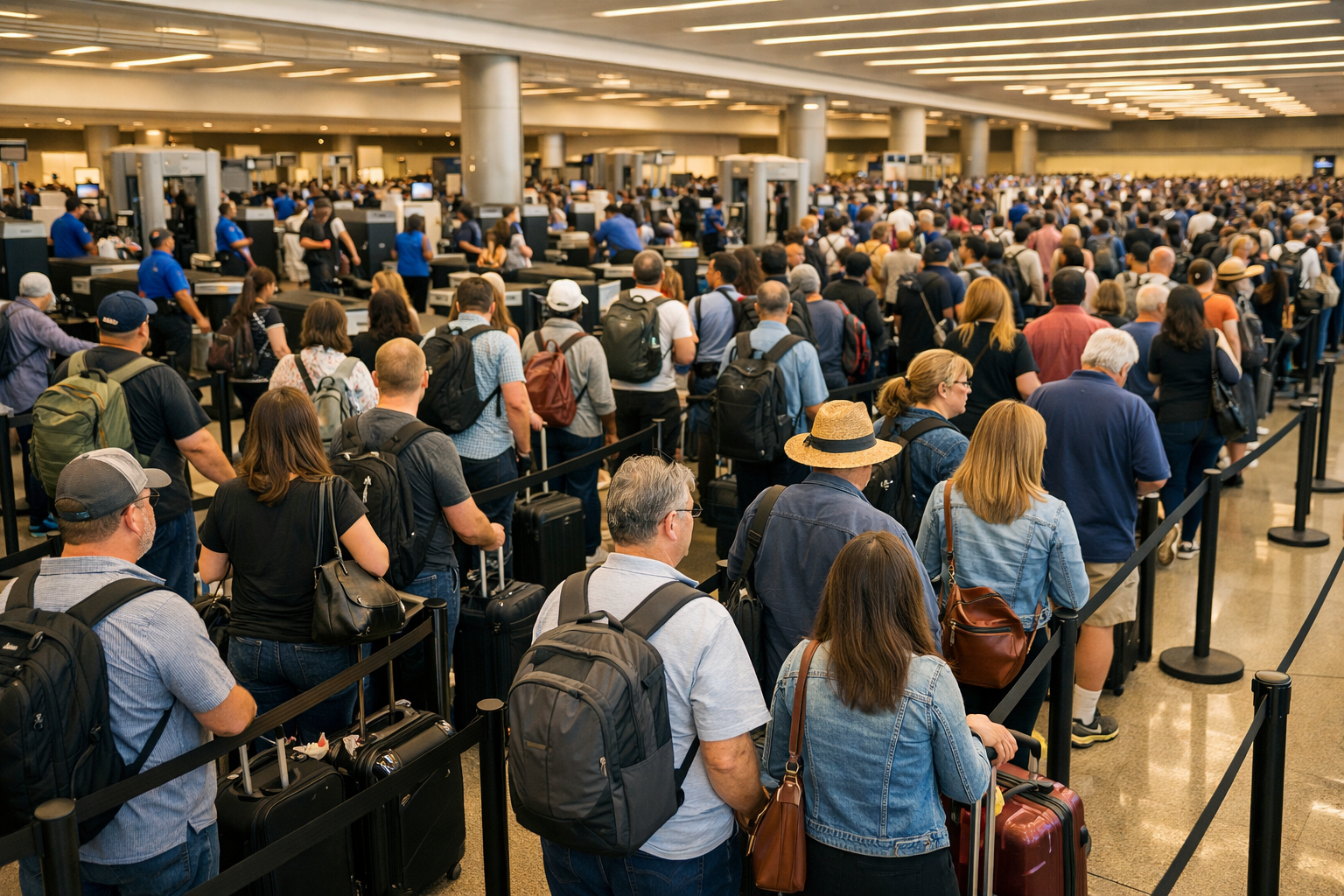
If you’ve flown through a major U.S. airport in the last few weeks, you may have noticed something unsettling: security lines stretching back what felt like miles, and wait times that would make even the most patient traveler sweat. There’s a real story behind those lines — and the good news is that things are finally starting to improve.
According to The Traveler, a partial government shutdown that began in mid-February 2026 left more than 50,000 TSA officers working without pay for weeks. As essential employees, they were legally required to keep showing up — but many couldn’t sustain that indefinitely. Over 450 agents resigned during the crisis, and absentee rates at some airports climbed as high as 35–40%, compared to a typical national rate of around 11%.
How Bad Did It Get?
At the peak of the disruption, the impact was severe and very real for everyday travelers:
- Houston Hobby Airport saw TSA wait times stretch to 3–4 hours at peak periods
- LaGuardia Airport in New York reported waits of up to 3 hours
- Atlanta Hartsfield-Jackson, one of the busiest airports in the world, was logging 1–2 hour delays at security
- Some airports were forced to close entire security checkpoints due to insufficient staffing
This all collided with one of the busiest spring travel seasons on record, making an already stressful situation significantly worse for families, couples, and retirees trying to kick off their vacations.
The Situation Is Improving — But Caution Is Still Warranted
Here’s the silver lining: an emergency executive order authorized back pay for TSA screeners, and workers began receiving paychecks earlier this week. The results were almost immediate. Houston’s George Bush Intercontinental Airport, which had seen four-hour waits, dropped to approximately 10 minutes during peak periods within days of paychecks arriving. Major hubs in New York, Atlanta, and Los Angeles also reported measurable improvements in line times.
That said, the underlying DHS shutdown has not been fully resolved, and industry groups are warning that the damage to workforce morale and long-term staffing could take time to fully heal. The Traveler reports that travelers should still plan to arrive two hours early for domestic flights and three hours early for international travel until conditions fully stabilize.
What This Means for Your Upcoming Travel Plans
Whether you have a trip on the books or are just starting to plan one, here’s what we recommend keeping in mind:
- Book early morning flights when possible. First departures of the day statistically experience fewer cascading delays.
- Factor in extra airport time. Even as conditions improve, give yourself a buffer — missing a flight due to a security line is a painful (and costly) experience.
- Consider TSA PreCheck or CLEAR. If you travel a few times a year, enrollment in a trusted traveler program is one of the best investments you can make. PreCheck lanes have been far less affected during this period.
- Stay flexible with connections. If you’re booking a trip with a connecting flight, choose itineraries that give you more layover time than usual until things settle down.
Ready to Plan Your Next Getaway?
Navigating travel disruptions is stressful enough on your own — and that’s exactly where having a travel advisor in your corner makes all the difference. We stay on top of developments like this so you don’t have to, and we can help you build an itinerary that accounts for real-world conditions, not just the best-case scenario.
Reach out to Kelly today and let us help you plan a trip that’s smooth from departure to return. Whether you’re dreaming of a beach escape, a European adventure, or a family vacation, we’re here to make it happen — with a lot less stress.