Planning a Trip to Europe This Year? Here's What the New Border System Means for You
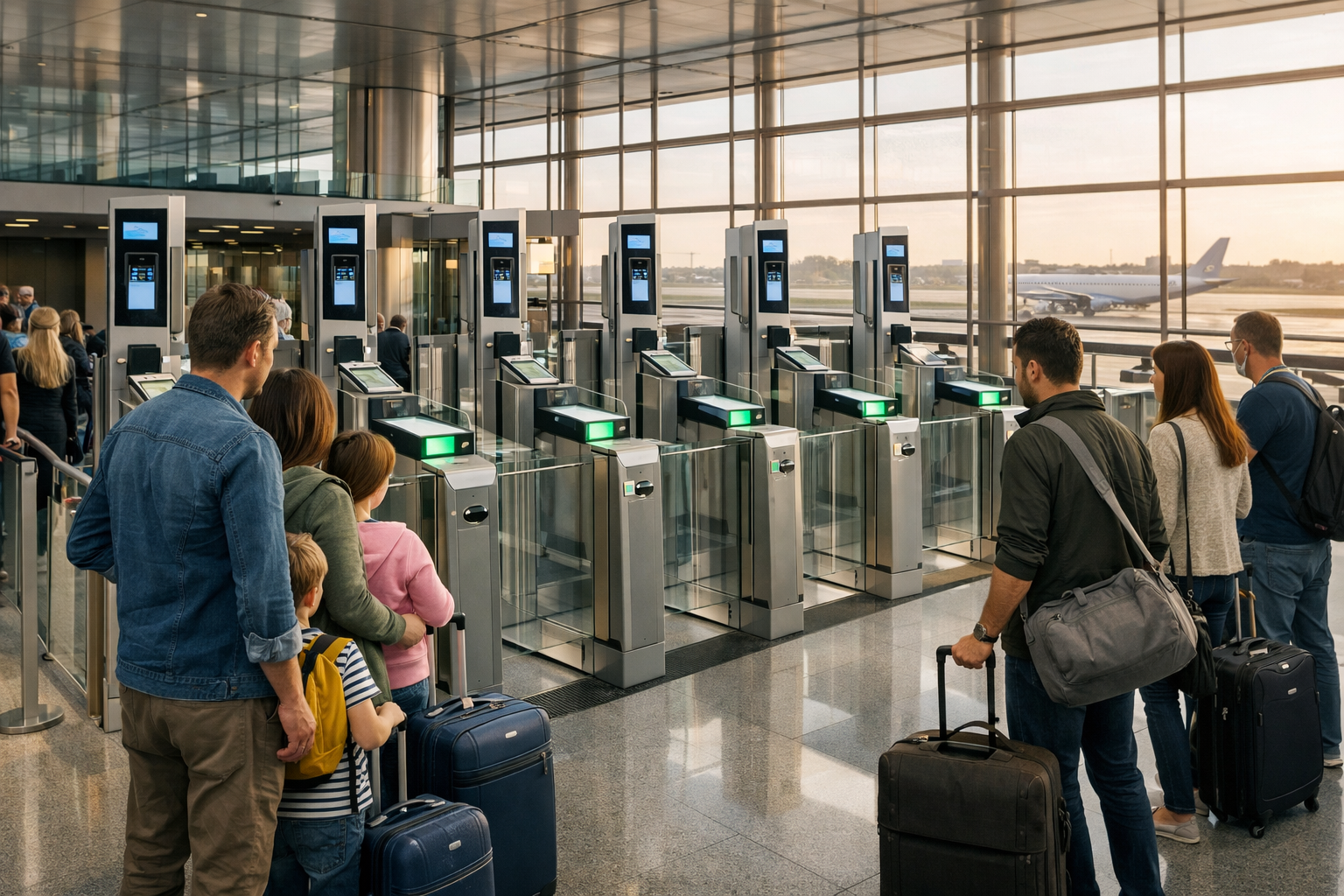
If a European vacation is on your radar this year — whether it’s a family trip to Paris, a romantic getaway to Rome, or a Mediterranean adventure — there’s an important new border process you need to know about before you go. Europe’s long-anticipated Entry/Exit System (EES) became fully operational on April 10, 2026, and it changes how non-EU travelers cross into the Schengen Area. Nothing about it should stop you from going, but walking in unprepared could mean unnecessary stress at the airport.
Here’s everything you need to know, straight from the source: The Flight King’s guide to EES for US travelers.
What Is the Entry/Exit System?
The EES is Europe’s new digital border management platform — and it replaces the traditional passport stamp you’ve probably gotten every time you’ve visited. Instead of an ink stamp in your passport, the system now creates a digital record of your entry and exit each time you cross into or out of the Schengen Area.
The data collected includes fingerprint scans and a facial image. This enrollment is mandatory for all non-EU travelers, regardless of your ticket class or nationality. Yes, that means Americans, Canadians, Australians, Brits, and anyone else who previously enjoyed visa-free entry into Europe.
The goal of the system is largely administrative — it’s designed to automatically track whether visitors are staying within the legal 90-day limit and to create a more consistent digital record at European borders. Long-term, it’s meant to make border management more efficient. Short-term, it means your first visit under the new system will involve a few extra steps.
What Actually Happens at the Border
When you arrive at a major European airport — think Paris CDG, Frankfurt, Amsterdam, Madrid, or Rome — you’ll go through passport control as usual. But now, in addition to presenting your passport, you’ll have your fingerprints scanned and a photo of your face taken.
If this is your first time crossing under EES, that enrollment process happens right there at the border. It’s not something you need to apply for in advance. After your first enrollment, subsequent visits should move faster since your biometric data is already in the system.
A few things worth knowing:
- Children under 12 do not need to provide fingerprints, but a facial scan is still required
- No one is exempt based on cabin class or frequent traveler status — this applies to everyone
- Tight connections are a real risk — if you’re arriving in Europe and connecting to another Schengen flight on your first visit under EES, the additional processing time could put a short layover in jeopardy
Build Extra Time Into Your Arrival
This is the most practical piece of advice we can give you right now: do not schedule a tight layover on your European arrival leg, especially this summer. The EES system is still in its early operational phase, and high-volume arrival periods — think summer Saturday mornings at CDG or Heathrow — are likely to see longer queues than usual while travelers and border agents alike adjust to the new process.
For direct arrivals, plan to allow more time than normal before picking up luggage or meeting a transfer driver. For connection itineraries, we’d suggest a minimum of three hours between your transatlantic arrival and your onward Schengen flight until the system matures.
What About ETIAS?
You may have also heard about ETIAS — the European Travel Information and Authorisation System — which is similar to the US ESTA program and will require visa-exempt travelers to obtain a pre-travel authorization before visiting Europe. ETIAS is a separate system from EES and is currently scheduled to launch in the fourth quarter of 2026. Once it’s live, you’ll need to apply and pay a small fee (approximately €20) before boarding a flight to Europe.
We’ll cover ETIAS in detail closer to its launch date. For now, the EES biometric enrollment is the only new step affecting travelers this summer.
Should This Change Your Plans?
Absolutely not. Europe is as wonderful as ever, and the EES is a manageable change — not a barrier. Millions of Americans travel to the Schengen Area every year, and the vast majority of first-time EES enrollments will be a matter of a few extra minutes at the border. The system is designed to get faster and smoother over time.
What it does mean is that preparation and planning matter more than ever. Knowing what to expect, building buffer time into your itinerary, and working with a travel advisor who’s tracking these changes can make the difference between a stressful arrival and a seamless start to your vacation.
If you’re planning a European trip and want help building an itinerary that accounts for the latest entry requirements — and avoids the rookie mistakes — reach out to us. We’re here to make sure every part of your trip, from the moment you land, goes as smoothly as possible.